Why a Car’s Shape Matters Beyond Its Drag Coefficient


A streamlined body can help a car move through air efficiently, but a single aerodynamic number cannot describe the whole vehicle. Shape also affects wind noise, stability, cooling, visibility, and the space available for passengers. Understanding these connections makes it easier to interpret design claims without assuming that the smoothest looking car is always the most practical.
Drag depends on size as well as shape
The drag coefficient describes how effectively a shape passes through air under specified conditions. Frontal area describes how much area the vehicle presents to that air. Both matter. A tall, broad vehicle with a favorable coefficient can still push aside more air than a smaller vehicle with a less impressive coefficient. Speed matters strongly too, which explains why aerodynamic improvements usually become more noticeable during faster travel than during slow neighborhood driving.
Compare the same kind of evidence
When considering aerodynamic claims, keep the coefficient, vehicle size, and actual driving context separate. A shape can look streamlined without revealing cooling demands, wake behavior, or the conditions behind an efficiency figure.
Air must leave the body cleanly
At the rear of a moving car, airflow may separate from the surface and leave a disturbed wake. Designers manage that separation through roof curvature, rear window angle, body taper, and carefully positioned edges. A sharply defined tail can be deliberate rather than crude. It may establish a predictable point where air leaves the body. Simply rounding every corner does not guarantee a smaller wake or lower drag.
Cooling creates an aerodynamic compromise
Air entering the front grille must travel through heat exchangers and eventually leave the engine compartment. That flow can add resistance, but restricting it too much would compromise temperature control. Some vehicles use shutters to vary the opening according to cooling demand. An owner should therefore avoid covering grilles to imitate a smoother design. A shape that looks aerodynamically untidy may contain an essential airflow path.
| Clue | What it can help explain | What it cannot settle alone |
|---|---|---|
| Drag coefficient | How efficiently a shape moves through air | Total drag without considering size |
| Frontal size | The area presented to oncoming air | How cleanly airflow leaves the body |
| Cooling openings | Air paths serving thermal needs | Efficiency across all operating conditions |
Small disturbances can become audible
Mirror housings, roof rails, window seals, and the junction between the windshield and roof influence local airflow. A small disturbance near a window can create an irritating whistle even when its effect on total drag is modest. Roof accessories introduce additional edges and cavities. If a newly fitted rack causes noise, check its approved installation and unused mounting openings before assuming the vehicle itself has developed a fault.
Aerodynamic quality belongs to the whole moving vehicle, not to a single number on a specification sheet.
Editorial takeaway
Judge aerodynamic design in everyday context
Consider two possible commuting cars: one has a low roof and narrow rear opening, while the other carries bulky equipment more easily. The first may offer an aerodynamic advantage, but that advantage must be weighed against the actual journey and load. Crosswind behavior, comfortable seating, and usable sightlines also deserve attention. Aerodynamics is a system of compromises rather than a beauty contest. For owners, the most useful approach is to keep unnecessary exterior attachments off the car, maintain body seals, and select a shape that suits real use while recognizing how speed and size affect its efficiency.
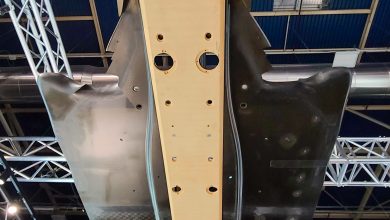
Featured image: Wind Tunnel Model Car at Formula 1 Exhibition, London by Hullian111, CC BY-SA 4.0. Image reproduced without editorial alteration; WordPress may create resized display copies.