Understanding Wheelbase and the Space Between the Axles

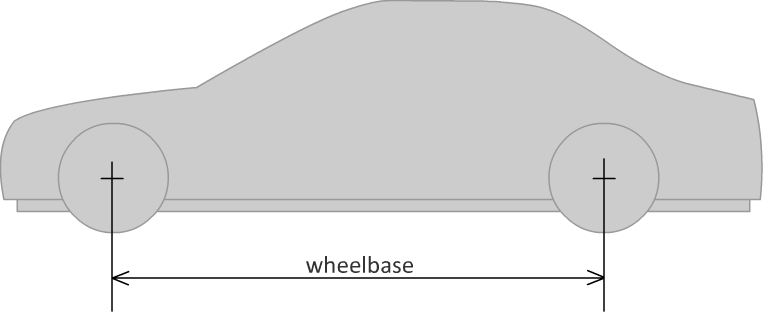
Wheelbase is the distance between the centers of the front and rear axles. It is easy to confuse this measurement with overall length, yet the two describe different parts of a vehicle’s layout. Wheelbase helps explain cabin proportions, turning behavior, and how a car responds to road changes, although it never determines those qualities alone.
Where the length is used
A longer wheelbase gives designers more distance between the wheels in which to arrange occupants and mechanical components. This can support generous rear legroom, but results depend on seat thickness, footwell shape, battery packaging, and where the front seats sit. A car can have a long wheelbase and still offer limited rear foot space. Measure the usable seating position rather than treating the dimension as a promise of comfort.
Bring the passenger you need to fit
If rear accommodation matters, set the front seat for its usual occupant before evaluating the space behind it. Then check entry, foot room, and sitting posture rather than treating wheelbase as a substitute for trying the cabin.
Overhangs tell another part of the story
The body extending beyond each axle is called an overhang. Two cars of similar overall length may distribute that length very differently. A vehicle with short overhangs can devote more of its footprint to the area between the axles. A long rear overhang may create a large luggage compartment, but it also affects how the tail moves around tight obstacles. Parking space requirements involve the full body, not just the wheelbase.
Why turning ability varies
With otherwise comparable steering geometry, a longer wheelbase generally needs more room for a tight turn. However, available steering angle, tire clearance, track width, and rear steering can substantially change the result. Published turning measurements may refer to different boundaries, such as tires or bodywork. During an inspection, try a realistic low speed turn in a permitted open area and watch the outer front corner as well as the rear wheel’s path.
| Dimension or feature | Useful clue | Verify in person |
|---|---|---|
| Wheelbase | Length between the axles | How that length is allocated inside |
| Overhangs | Body extending beyond the axles | Parking fit and usable luggage arrangement |
| Steering arrangement | How maneuvering may feel | Turning space on a suitable test route |
Ride quality involves more than length
The spacing between axles changes the timing of road inputs reaching the front and rear wheels. That timing can influence pitching motions over repeated bumps. A longer layout may feel settled on some roads, but springs, dampers, tires, suspension travel, and body control remain important. It is entirely possible for a shorter car to ride more comfortably than a longer one. A drive on familiar uneven surfaces is more informative than choosing by dimensions alone.
Wheelbase begins the space conversation; the seated passenger finishes it.
Editorial takeaway
Use wheelbase as a clue, then verify
For a family carrying adults in the rear, wheelbase can help identify vehicles worth inspecting. For someone navigating a narrow courtyard, it prompts closer attention to turning space and corner clearance. In both cases, the useful next step is physical verification. Set the front seat for its regular occupant, check rear knees and feet, and examine maneuvering room. Wheelbase explains part of a car’s architecture, but its value lies in guiding better questions about the completed vehicle rather than ranking cars by one measurement.
Featured image: Wheelbase by MrBlue (Foriskak) and Ashvindx (Diviaraj Ujhoodha), CC BY-SA 3.0. Image reproduced without editorial alteration; WordPress may create resized display copies.