A modern vehicle body may combine several grades of steel with aluminum, plastics, glass, adhesives, and other materials. This mixture is purposeful. Different parts must resist loads, absorb energy, support equipment, prevent corrosion, or provide an attractive surface. Choosing one material for everything would usually create unnecessary compromises in weight, cost, manufacturing, or repairability.
Even apparently minor exterior parts can have mounting features designed to behave in a particular way. Replacement compatibility therefore includes the attachment system, not just surface shape.
Strength is not the same as stiffness
Strength describes resistance to permanent damage or failure under load, while stiffness describes resistance to elastic deflection. A strong material is not automatically the best way to make a panel resist bending. Thickness, shape, ribs, and the distance between supporting structures also matter. A curved hood can feel more rigid than a flat sheet of similar material because geometry contributes to how loads are carried.
Ask about the repair method
When body damage needs attention, identify the affected part and ask a qualified repairer about the manufacturer’s repair process. Material names alone do not establish whether a panel can be reshaped, joined, or replaced using a particular method.
Different locations have different jobs
A roof pillar, a door skin, and a bumper cover face different demands. Structural members must manage carefully defined load paths. An exterior skin also needs surface quality and resistance to everyday dents. A flexible bumper cover must accommodate its shape and minor deformation while concealing supporting parts. Describing all three simply as metal or plastic misses the engineering choices that determine their behavior.
Lightweight materials bring packaging opportunities
Reducing mass can benefit efficiency and handling, but material substitution is rarely a direct exchange of identical parts. A lighter material may need a thicker section or different joining method. Designers may use the available mass savings elsewhere, such as adding equipment or improving structural performance. Owners therefore should avoid assuming that a vehicle with more aluminum must always be lighter than another complete vehicle of similar size.
| Question | Why it matters | Useful evidence |
|---|---|---|
| Where is the material used? | Different parts perform different jobs | Vehicle-specific construction information |
| How is the part joined? | The joint is part of the structure | Approved repair procedures |
| What does repair require? | Methods depend on the actual assembly | Assessment by a suitably equipped repairer |
Joining methods are part of the design
Welds, rivets, bolts, and structural adhesives can each serve particular purposes. An adhesive joint may spread loads across a broader area, while mechanical fasteners can be necessary at specific connections. Combining materials also requires attention to corrosion where dissimilar metals interact. These details explain why collision repairs require the appropriate procedures. A repair that restores appearance without restoring the intended joints may leave important structural behavior changed.
A body material earns its place through the job it performs and the way it works with its neighbors.
Editorial takeaway
What material choices mean for owners
For routine ownership, protect damaged paint, keep drainage paths clear where the manual permits inspection, and have significant dents or corrosion assessed. Do not judge crash protection by tapping a panel or comparing how heavy a door feels. Those impressions say little about the complete structure. When evaluating a used vehicle, repair quality and evidence of damage matter more than a marketing label about construction materials. The useful conclusion is that material diversity is a tool: the quality of the finished design depends on matching each material, shape, and connection to its actual job.
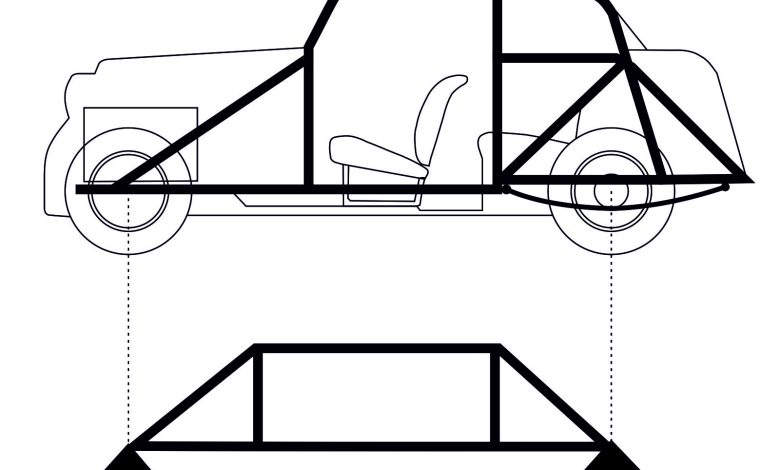
Featured image: Passenger car unibody diagram by DL24, CC0 1.0. Image reproduced without editorial alteration; WordPress may create resized display copies.