What Underbody Panels Do for Airflow and Everyday Ownership

The underside of a car is not simply an exposed collection of mechanical parts. Many vehicles use shaped panels to manage airflow beneath the body. These covers may look ordinary, but they can serve several functions at once. Knowing their role helps owners respond sensibly when a panel becomes loose, damaged, or missing.
A panel may also conceal fluid residue, so a clean garage floor does not rule out a leak. Have unusual smells or visible drips checked without removing protective parts yourself.
Smoothing a complicated surface
Suspension components, structural members, exhaust equipment, and drivetrain parts interrupt airflow. Underbody panels can reduce the extent to which air encounters those irregular shapes directly. The result depends on the complete vehicle, including ride height, wheel openings, and rear body shape. A flat looking cover is therefore part of a larger aerodynamic arrangement, not proof that the underside behaves like a perfectly smooth surface.
Inspect without crawling underneath
If a panel appears loose, arrange a safe inspection rather than reaching beneath an unsupported vehicle. Describe any visible hanging edge or new scraping sound and let the repairer verify the correct panel, fixings, and installation.
Managing cooling and heat
Some covers contain openings, channels, or textured areas that guide air toward components or provide an exit path for hot air. Other sections may sit near heat shields. These features explain why covering holes or substituting a homemade flat sheet can have unintended consequences. A replacement needs the correct geometry and suitable attachment points, rather than merely matching the approximate outline of the missing piece.
Protection has practical limits
A plastic undertray may help reduce road spray and small debris reaching certain areas. It is not necessarily a structural skid plate. Contact with a high curb, deep rut, or hard object can break the cover or its fasteners. Owners should not interpret a covered underside as permission to drive over obstacles. Ground clearance must include the lowest vulnerable parts and the way the vehicle moves when loaded.
| Role | What to consider | Ownership implication |
|---|---|---|
| Airflow management | Continuity of the intended underside shape | Missing sections may alter the designed flow |
| Thermal management | Openings and shielding serve specific purposes | Do not cover vents or improvise substitutes |
| Everyday protection | Protection is limited by construction and location | Damage still needs an appropriate inspection |
Loose panels deserve prompt attention
A scraping or flapping sound after contact with an obstacle may come from a displaced cover, but it can also indicate other damage. Stop in a safe place and arrange inspection when necessary. Do not crawl beneath a vehicle supported only by a jack. A loose panel can drag, detach, or rub against another component. Repeatedly pushing it back into place without replacing damaged fixings may fail to address the reason it keeps moving.
An underbody panel is part of the vehicle’s arrangement, even when its work is mostly out of sight.
Editorial takeaway
Preserve the intended installation
After service, check from a normal standing position for visibly hanging edges or missing sections where accessible. Ask the workshop to restore damaged clips, screws, and shields using the appropriate parts. If a used car has absent covers, find out whether removal followed a routine service, impact, or unresolved leak. The useful conclusion is that underbody panels deserve the same attention as visible trim: they may influence airflow, cooling, and protection, and their correct fit matters more than their modest appearance suggests.
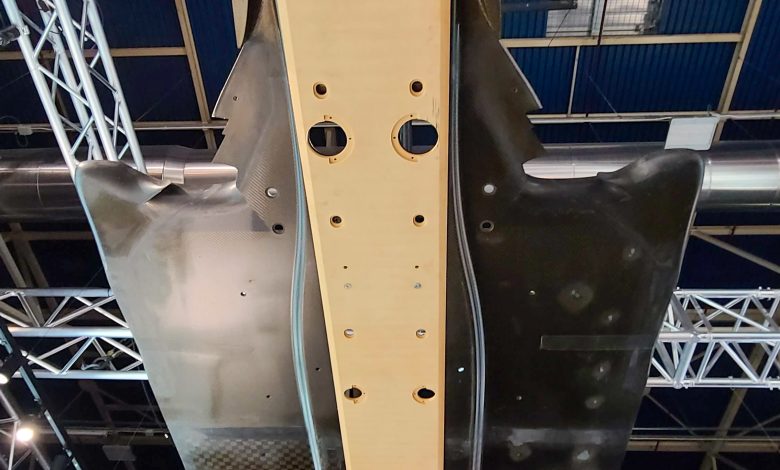
Featured image: Exhibition of F1 Underbody (52849866183) by Steve (mrlaugh on Flickr), CC BY-SA 2.0. Image reproduced without editorial alteration; WordPress may create resized display copies.