Steering wheel adjustment helps align a driver’s hands, shoulders, eyes, and legs with the vehicle’s controls. It is more than a convenience for people of different heights. A suitable position can reduce unnecessary reaching and keep important instruments visible. The adjustment should be considered together with the seat, because changing either one alters the relationship to the other.
Set the seat before moving the wheel
Begin with a seating position that allows comfortable pedal operation while the back remains supported. The legs should not need to straighten completely to operate a pedal through its required travel. Seat height should provide a useful view without compromising headroom. Once those basics are established, adjust the steering wheel toward the hands. Moving the seat close merely to reach the wheel can leave the legs cramped and distort the rest of the position.
Repeat the full adjustment sequence
After another driver has used the vehicle, establish the seat position before correcting the wheel. Confirm the adjustment is locked and that instruments remain readable, following the manual’s guidance on seating and airbag positioning.
Understand tilt and reach
Tilt adjustment changes the wheel’s angle or vertical position, depending on the mechanism. Reach adjustment moves it closer to or farther from the driver. Some vehicles offer only one of these movements, which can make fit more difficult for drivers with different torso and leg proportions. A wheel that feels comfortable in height may still be too far away. Check both dimensions rather than stopping when the rim appears centered in front of the chest.
Keep shoulders relaxed and supported
In a useful driving position, the arms retain a comfortable bend and the shoulders do not have to lift or roll forward for ordinary steering. Try the normal hand positions and reach for frequently used stalks while stationary. If the upper body repeatedly leaves the backrest, reassess the wheel’s reach. Avoid adopting a rigid pose that feels correct for a photograph but becomes tiring when actual small steering movements are required.
| Adjustment | Purpose | Final check |
|---|---|---|
| Seat position | Supported posture and usable pedal reach | Pedal operation without excessive stretching |
| Wheel tilt and reach | Comfortable arm and shoulder position | No repeated leaning away from the backrest |
| Instrument view and clearance | Readable information and room to move | Rim and thighs do not create an awkward compromise |
Check what the rim conceals
The steering wheel can obscure part of the instrument display, especially after seat height changes. Confirm that essential information remains readable without ducking or leaning sideways. Also check clearance between the wheel and thighs during normal pedal movement. Clothing worn in colder weather can affect this relationship. Follow the vehicle’s guidance on seating distance and airbag positioning, and never place accessories over the airbag cover to compensate for an awkward grip.
The wheel should meet a well-positioned driver rather than pull the driver out of a supported seat.
Editorial takeaway
Finish with a repeatable setup
Lock the adjustment securely before driving and make any later changes only while safely stopped. If the car has memory settings, save the seat and wheel together where supported. In a shared vehicle, check the setup each time rather than assuming a saved position was recalled correctly. A short familiar drive can reveal reaching that was not obvious while parked. The conclusion is to treat steering adjustment as a coordinated fitting process: first establish safe pedal access and posture, then position the wheel for relaxed control, clear instruments, and adequate space.
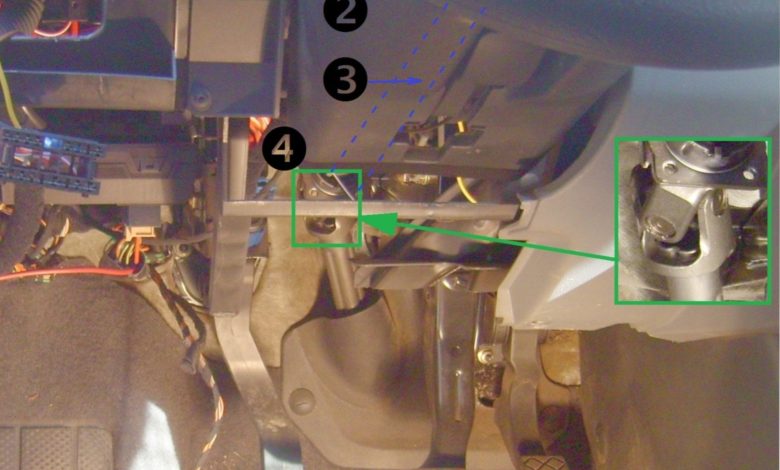
Featured image: Steering column by Hundehalter, CC BY-SA 3.0. Image reproduced without editorial alteration; WordPress may create resized display copies.