A small supply of the correct engine oil or coolant can make routine level maintenance easier. That advantage disappears when containers lose their labels, collect dirt, or become confused with another product. Fluid storage is primarily about preserving identity and cleanliness, so the material added later is still appropriate for the vehicle.
Keep the original identification
Retain fluids in their original containers with readable labels and tightly closed caps. A handwritten description such as ‘car oil’ omits the viscosity and performance approval that determine suitability. If the vehicle changes, reassess the stock rather than assuming the remaining product fits the new engine.
Never transfer automotive fluid into a food or drink container. Apart from the risk of accidental ingestion, the replacement container may not resist the contents or seal reliably. Keep the product information available, including any storage instructions and guidance on use after opening.
Protect identity as well as cleanliness
Retain the original container and readable label, and close it promptly after use. Keep pouring equipment clean and dedicated appropriately. If the specification, mixture, or storage history cannot be established, do not treat the contents as a dependable top-up supply.
Choose a stable storage location
Store containers upright in a protected area away from children, animals, heat sources, and direct sunlight, following the manufacturer’s directions. A containment tray can limit the spread of a small leak. Avoid leaving containers loose where they can fall, rub through, or be crushed by other stored equipment.
Large temperature swings and persistent moisture are poor conditions for supplies and labels. A container in an exposed shed may experience a different environment from one in a dry utility area. Inspect the cap, seam, and label before use rather than assuming an unopened-looking package has remained sound.
| Check | Acceptable evidence | Reason to pause |
|---|---|---|
| Identity | Readable product and specification label | Unmarked bottle or contents transferred without traceability |
| Mixture | Clear concentrate or ready-mixed identification | Unknown dilution or conflicting handwritten notes |
| Condition and handling | Secure closure and suitable storage history | Debris, damaged packaging, or uncertain contamination |
Protect the fluid during each use
Clean dirt from the cap area before opening. Use a clean funnel dedicated to an appropriate purpose, and keep its opening protected between jobs. A funnel previously used for contaminated waste is not a good tool for adding fresh oil. A small amount of grit can defeat the care taken in choosing the correct product.
Do not pour unused fluid back from a dirty drain container into the original bottle. Once cleanliness or identity is uncertain, keep it separate and arrange suitable disposal. Preserving a questionable remainder saves little compared with the difficulty of diagnosing contamination introduced during maintenance.
Label mixtures and avoid accidental dilution
Coolant concentrate and ready-mixed coolant require especially clear distinction. If a permitted mixture is prepared for later use, label its specification and concentration using an appropriate dedicated container. Otherwise someone may dilute it again or mistake concentrate for a ready-to-use top-up.
Keep waste fluid physically separate from usable stock. A container holding drained oil should say so plainly and should never return to the shelf of fresh supplies. Mixing waste streams can also complicate collection, so ask the disposal facility how it accepts each fluid.
A top-up bottle is useful only while its contents remain identifiable, suitable, and clean.
Editorial takeaway
Review supplies when servicing the car
At each service, compare stored products with the current vehicle requirements and inspect their condition. Follow product shelf-life guidance rather than inventing a universal expiry date. Clean, traceable stock supports a reliable top-up; uncertain stock should be replaced through appropriate disposal instead of becoming an experiment inside the engine.
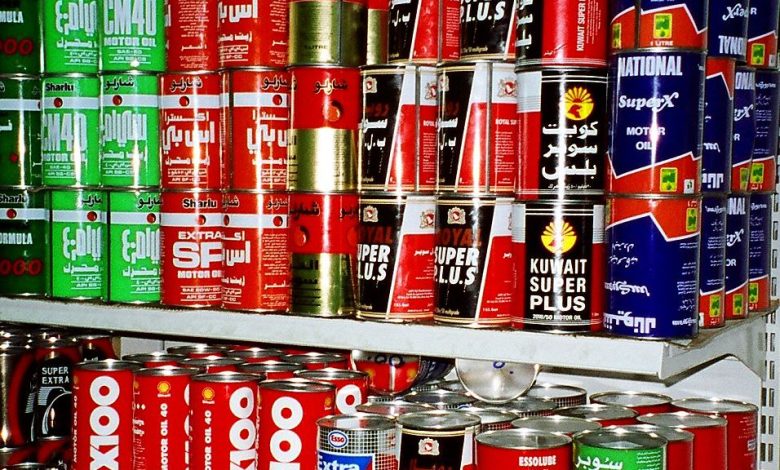
Featured image: Motor Oils.jpg by PaddyBriggs~commonswiki, Public domain. Image reproduced without editorial alteration; WordPress may create resized display copies.