
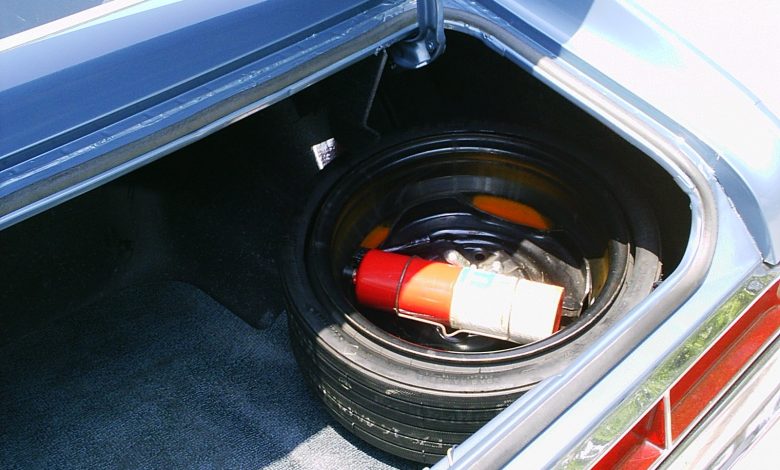
A temporary spare is a recovery tool
A compact spare is designed to get a vehicle out of a tire failure situation under specific restrictions. Its narrow tread, construction, and inflation requirements can differ substantially from the regular road tires. Do not assume that the spare can remain fitted indefinitely because it bolts onto the hub. Read its sidewall instructions and the owner manual before relying on it. Vehicle guidance can also specify where it may be installed and whether another wheel must first be moved.
Read the spare’s own instructions
Before departure, locate the spare’s inflation requirement and the vehicle’s installation restrictions. Do not borrow speed, distance, or axle-placement advice from a different car.
Check readiness before a puncture happens
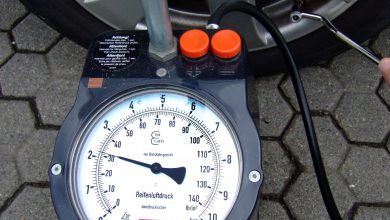
A spare stored beneath a floor or under the vehicle can lose air without attracting attention. Include it in routine pressure checks using its own specified target. Look for cracking, damage, and storage related deterioration, and confirm that the retaining equipment can be released. Check that the jack, handle, wheel lock key, and required tools are present. Discovering a missing key or flat spare beside a busy road can turn a manageable puncture into a recovery problem.
| Check | Reason | If unresolved |
|---|---|---|
| Inflation and condition | A stored spare can be unusable when needed | Have it assessed before relying on it |
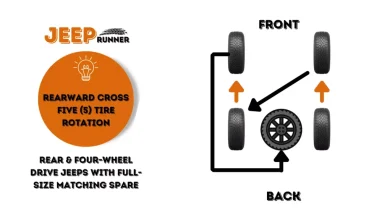
| Permitted installation position | Driveline and clearance restrictions can differ | Follow the vehicle’s wheel-moving procedure |
| Jack, key, and safe location | Correct equipment cannot compensate for unsafe ground | Arrange recovery when the site is unsuitable |
Handling and control systems may feel different
A temporary spare can change cornering grip, steering response, braking behavior, and ride quality. Some vehicles also impose restrictions because a different rolling circumference affects the driveline or electronic control systems. Follow the vehicle specific instructions rather than a general rule remembered from another car. Drive gently within every stated limit and allow extra space. If the vehicle develops severe vibration, unusual noise, or unexpected handling, stop safely and obtain assistance instead of assuming those symptoms are normal for a spare.
Roadside installation is not always the safest option
A jack needs a firm, level location and the correct lifting point. Soft shoulders, slopes, moving traffic, and poor visibility can make wheel changing unsafe. Never place any part of the body beneath a vehicle supported only by its emergency jack. If the location is unsuitable or the equipment is unfamiliar, use roadside assistance. A wheel that appears stuck on the hub or hardware that will not loosen is another reason to seek help rather than improvising force near traffic.
A spare earns its place by enabling a controlled recovery, not by becoming an overlooked road tire.
Editorial takeaway
Restore the normal tire arrangement promptly
Arrange inspection of the failed tire and wheel as soon as practical. The cause may be a repairable tread puncture, but sidewall damage, prolonged underinflated driving, or wheel damage may require a different response. After the regular wheel is restored, secure the spare and tools correctly so they cannot move during braking. Recheck the spare’s condition before storing it away. A temporary spare is most valuable when it is prepared in advance, used exactly as directed, and replaced by the proper road assembly promptly.
Practice locating the equipment while the vehicle is safely parked at home. Reading the lifting instructions in daylight is easier than trying to understand unfamiliar diagrams during a stressful roadside stop.
Featured image: 1970 AMC AMX 390 go-package Commodore Blue and Machine wheels 7 by Christopher Ziemnowicz (CZmarlin), Public domain (PD-self). Image reproduced without editorial alteration; WordPress may create resized display copies.