Separate overnight needs from the main luggage
Repeatedly unpacking a full suitcase can make a touring holiday feel surprisingly laborious. An overnight bag solves a specific problem: it puts the things needed between arrival and the next morning in one manageable place. This is especially helpful when the main luggage contains clothes for several climates or activities.
Choose a bag you can carry comfortably with your other essentials. A compact soft bag often fits beside larger cases without wasting space. Its purpose is access, so a modest size with a clear opening may be more useful than numerous small pockets that hide ordinary items.
Pack a complete arrival-to-departure cycle
Walk mentally from check-in through bedtime to the next morning. Put the items needed for that cycle together and place the bag where it can be retrieved safely without unpacking the entire cargo area.
Pack for the actual evening routine
Think through the first hour after arrival. You may want washing supplies, comfortable clothes, a charger, and something clean for the following day. Include the items that let you settle in immediately. Keep anything individually important, such as prescribed personal essentials, in the place where you normally manage it.
For a family, consider whether one shared bag or separate small bags creates less confusion. A shared bag works when one person unpacks everything. Separate bags can be simpler when travelers have different bedtimes or need to reach their own belongings without disturbing the whole room.
| Item group | Placement | Reason |
|---|---|---|
| Evening wash kit and sleepwear | Together near the opening | Makes settling in straightforward |
| Next-day clothing | A separate clean section | Avoids searching through the main suitcase |
| Worn clothing | A designated laundry pouch | Keeps used items from drifting into clean supplies |
Give used clothing a clear destination
Clothing becomes harder to manage when clean and worn pieces drift into the same compartment. Pack a washable laundry pouch or another suitable container. Let damp items dry appropriately before enclosing them for an extended period; a bag should organize laundry rather than conceal moisture.
A simple rotation helps on longer journeys. At a convenient overnight stop, replenish the small bag from the main case and remove what is no longer needed. You then make one deliberate luggage adjustment rather than rummaging through everything at every hotel entrance.
Keep arrival items easy to reach
The best packing arrangement reflects the unloading order. If the overnight bag sits below a rigid case and several loose objects, its smaller size provides little benefit. Place it where you can retrieve it without rearranging the whole cargo area, while keeping luggage properly contained for travel.
Keep reservation details and accommodation instructions separate from the clothes. A paper address or saved confirmation can be useful when reception is poor. Check arrival arrangements before departure, especially if the property has a separate entrance or a parking area some distance from the room.
An overnight bag succeeds when the next morning is as easy to pack for as the evening was to unpack.
Editorial takeaway
Review the bag after the first stop
The first evening usually reveals unnecessary items and missing conveniences. Perhaps the extra shoes stayed untouched while a reusable water bottle was constantly needed. Adjust the contents rather than treating the original packing list as fixed.
An effective overnight bag supports an ordinary routine with less unpacking, carrying, and searching. It does not need to cover every possibility. Keep it focused on the transition from road to room and back again, and it will make frequent accommodation changes feel much easier throughout the trip.
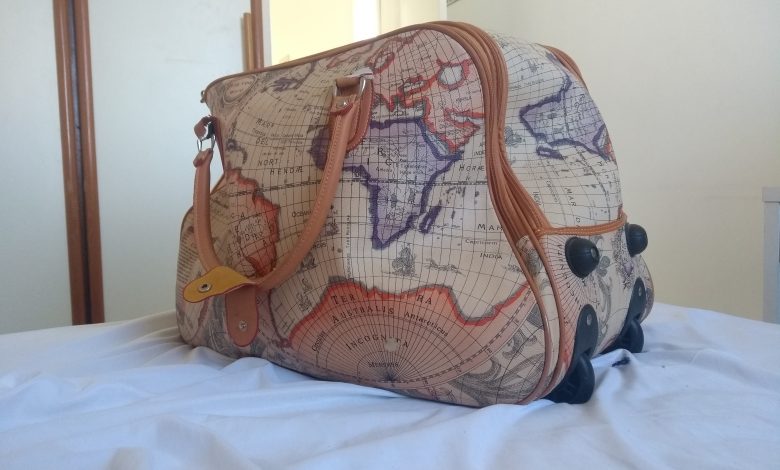
Featured image: Country print travel bag by MinerbNosk, CC BY-SA 4.0. Image reproduced without editorial alteration; WordPress may create resized display copies.