
Understand what happens when the car slows
Regenerative braking allows an electric motor to act as a generator during deceleration. Some of the vehicle’s moving energy becomes electrical energy that can return to the battery. The process also creates a slowing effect. It cannot recover every unit of energy used to accelerate, so repeated speeding up and slowing down is still less useful than avoiding unnecessary changes.
Regeneration works within limits set by the vehicle. Battery condition, temperature, state of charge, traction, and the chosen driving mode can influence how much is available. The driver remains responsible for slowing and stopping the vehicle even when the usual response feels strong enough to handle most ordinary situations.
Learn lift-off response in a familiar setting
Read the selected drive mode before moving and leave extra space as you become familiar with it. Regeneration can vary during the same journey, so pedal technique must remain responsive to actual slowing.
Learn the connection between pedal movement and response
Some cars increase regeneration as the driver releases the accelerator. Others provide different selectable levels or coordinate regeneration through the brake pedal. Read the manual to understand the controls in your car. Similar names on two vehicles do not guarantee that they stop, hold, or resume motion in the same way.
Practice gentle transitions on a clear, suitable route. Ease the pedal back in small steps and notice the response before approaching a junction or parked traffic. The goal is to become precise enough that passengers do not feel a sudden lurch each time you adjust speed. Keep your foot ready to use the brake.
| Situation | What can change | Driver priority |
|---|---|---|
| Gentle lift-off with space ahead | Some energy can return to the battery | Anticipate rather than slow late |
| High charge or a cold battery | Available regeneration may decrease | Use friction braking as required |
| Long descent | Energy recovery has system limits | Control speed with the vehicle’s prescribed methods |
Look farther ahead to reduce wasted motion
Anticipation makes regeneration more useful. When traffic ahead is clearly slowing, reducing power early can create a gradual approach. If the road remains open, maintaining a steady suitable speed can be better than slowing unnecessarily just to see energy flow back into the battery. Recovered energy is only part of a larger driving picture.
For example, approaching a familiar turn does not require holding speed until the last moment and then asking for strong regeneration. An earlier, measured reduction can reduce passenger discomfort and leave more attention for other road users. Choose the braking needed for safe positioning, not a particular appearance on the energy display.
Expect the available effect to change
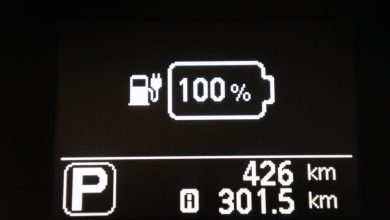
A full or cold battery may accept less charging power and therefore allow less regeneration. Vehicles differ in how they communicate or compensate for that change. Check indicators before relying on a familiar pedal response, particularly after charging or when leaving the car parked in cold conditions.
Long descents can also demand more braking than regeneration alone can provide. Use the vehicle’s recommended controls and normal brake pedal as required. Do not attempt to maximize energy recovery at the expense of a safe speed, adequate following distance, or stable control on slippery surfaces.
Smooth electric driving starts with looking ahead; regeneration rewards that habit without replacing the brake pedal.
Editorial takeaway
Make smoothness the practical goal
Judge progress by calm, predictable speed changes rather than the amount of energy displayed as recovered. Learn whether your selected mode brings the car to a complete stop and whether a separate hold function is active. Regeneration is a useful feature, but its best everyday benefit comes from combining informed pedal control with anticipation and a readiness to use the full braking system whenever conditions require it.
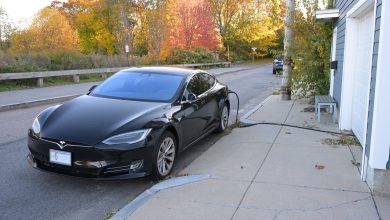
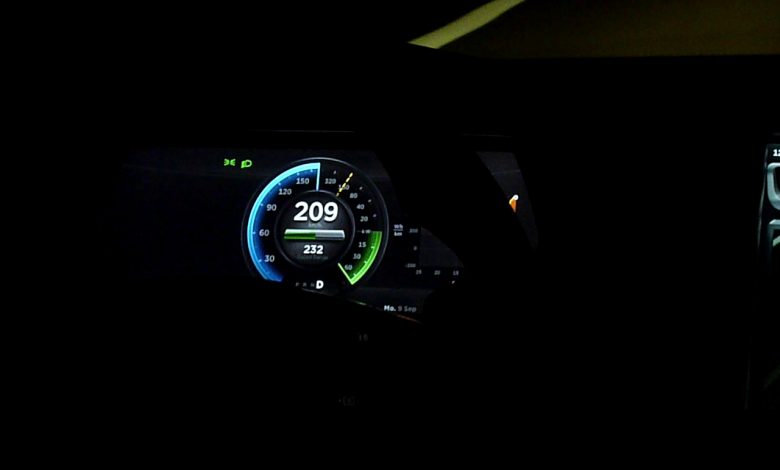
Featured image: Tesla Model S P85+ 60 kW Regenerative Braking by Lklundin, CC BY-SA 4.0. Image reproduced without editorial alteration; WordPress may create resized display copies.