Oil viscosity describes resistance to flow under specified conditions. It influences how readily oil moves during starting and how it behaves when the engine is hot. The numbers on a container are useful, but they are only part of the selection process. A correct service fill must also satisfy the engine manufacturer’s performance requirements and any applicable approvals.
Read the two viscosity designations
In a multigrade designation, the number before the W relates to defined low-temperature performance. The second number identifies a hot-viscosity grade under standardized tests. The W means winter; it does not stand for weight. These designations classify behavior rather than describing a simple ingredient mixture or a universal measure of quality.
A lower first number does not mean the oil is automatically too thin when the engine reaches operating temperature. Likewise, a higher second number does not establish better protection for every engine. Oil galleries, bearing clearances, pumps, and hydraulically controlled components are designed around particular operating characteristics.
Check the approval behind the large numbers
Write the required oil approval beside the viscosity in your service record. Ask the workshop to identify both on the proposed product. A matching viscosity designation alone cannot establish that two oils meet the same engine or aftertreatment requirements.
Find the engine’s complete requirement
Locate the specification for the exact engine in the owner’s manual or service information. Some vehicles permit several viscosity grades within a temperature chart, while others call for a tightly defined combination. A workshop should be able to identify the proposed oil by both viscosity and required approval, rather than simply describing it as premium or synthetic.
For example, two containers may carry the same viscosity designation while meeting different performance standards. One could be unsuitable for the engine’s exhaust aftertreatment requirements or service regime. Matching the large numbers on the front label is therefore necessary in many cases but not sufficient.
| Label detail | What it helps establish | What it cannot establish alone |
|---|---|---|
| Winter designation | Classified low-temperature behavior | Suitability for every engine in cold weather |
| Hot-viscosity grade | A defined viscosity classification when hot | Superior protection merely because the number is higher |
| Required manufacturer approval | A match to the stated application requirement | Permission to ignore level checks or service intervals |
Avoid using thickness to hide symptoms
Changing to a thicker oil because an engine makes noise can conceal a symptom without correcting its cause. A rattle may involve pressure supply, mechanical wear, or another fault that needs diagnosis. An oil-pressure warning is especially unsuitable for experimentation. Stop operation as directed by the vehicle instructions and have the pressure concern assessed.
Oil consumption also needs context. An external leak, operating conditions, or an internal problem can all contribute. Before requesting a different grade, document the amount consumed over a known distance and confirm that the current oil meets the specified requirement. That gives the technician a meaningful starting point.
Handle temperature and top-ups sensibly
If the manual offers alternative grades for ambient temperature, follow its boundaries instead of guessing from seasonal weather. Keep a suitable top-up supply clearly labeled. When the exact product is unavailable, consult the manual’s permitted emergency alternatives rather than assuming every oil with the same general description is interchangeable.
The right oil is a complete specification, not a contest to find the largest number.
Editorial takeaway
Choose by specification, then maintain it
Viscosity makes sense when viewed alongside the engine’s full oil specification and service interval. Record what was installed and how much was used. The practical objective is consistent compliance with the designed lubrication system, supported by proper level checks, rather than chasing a supposedly superior number on the container.
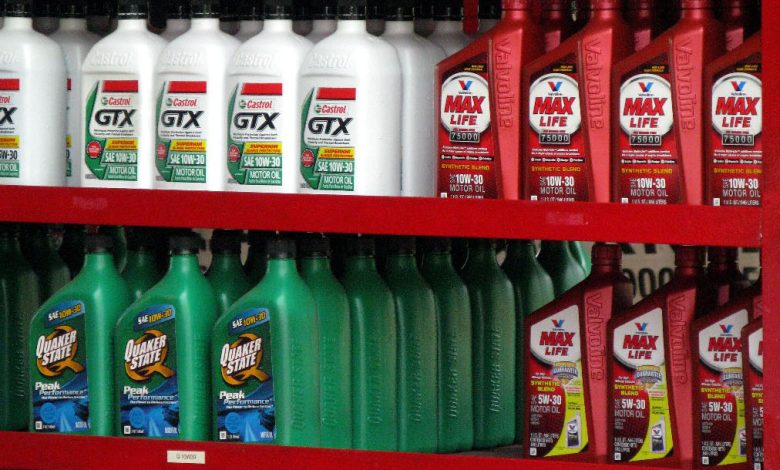
Featured image: Motor oil bottles variousbrands.jpg by Frankieleon, CC BY 2.0. Image reproduced without editorial alteration; WordPress may create resized display copies.