Begin with the times your car already rests
A useful charging routine starts with your parking schedule rather than an ambition to keep the battery full. List the places where the car normally sits for several hours. Home, a workplace, or another dependable location may offer a natural charging window. The best opportunity is one you can use consistently without reorganizing the rest of your day.
Distinguish dependable access from occasional convenience. A charger at a frequently visited destination may be helpful, but it is not a reliable foundation if spaces are often occupied or the visit is usually brief. Build your normal plan around access you understand, then treat other opportunities as flexibility.
Plan around a repeatable parking window
Choose a routine that comfortably replaces typical daily use during an ordinary stay. Check the car’s scheduling behavior while parked so a departure-time setting does not become a surprise on a busy morning.
Estimate the energy your routine needs
Use the vehicle’s trip information to observe consumption over several representative journeys. Distance alone is incomplete because road speed, weather, terrain, and cabin conditioning change energy demand. Include school runs, errands, and other travel that happens outside the main commute. A quiet working week may not represent your normal ownership pattern.
For example, a car that returns home every evening may need only a modest replenishment after ordinary commuting. The same owner might need a larger starting reserve before a weekend family visit. These are different charging decisions. A repeatable weekday routine can coexist with occasional deliberate preparation for a longer trip.
| Parking pattern | Routine to consider | Check before relying on it |
|---|---|---|
| Regular overnight access | A scheduled session suited to the next day | Connection, schedule activation, and departure readiness |
| Workplace access on some days | Top-ups coordinated with actual attendance | Availability and an alternative when occupied |
| Unpredictable public access | A modest reserve and a known backup location | Compatibility and current access arrangements |
Choose settings that reduce unnecessary decisions
If the car supports a charging target and schedule, consult its manual and select settings appropriate to the battery and your use. Follow the vehicle-specific guidance rather than copying a fixed target from another owner. A departure timer may coordinate charging and cabin preparation, but its exact behavior depends on the car.
Check the first few scheduled sessions. Confirm that the charger supplies power during the selected window and that the car reaches the intended target before departure. Scheduling settings can exist in both the vehicle and charging equipment. Conflicting timers may prevent a session from starting even when each device appears correctly configured.
Make the physical routine easy to repeat
Park so the cable reaches without stretching, creating a walking hazard, or placing strain on the connector. Use equipment suitable for the installation and have electrical suitability assessed by a qualified professional. Do not improvise with damaged plugs, unsuitable adapters, or an extension arrangement simply to make the nightly habit more convenient.
After connecting, verify that charging has actually begun or is correctly scheduled. A quick glance at the vehicle or charger indicator is more dependable than assuming that a connected cable guarantees energy transfer. Establish a simple morning check, especially before days when you expect to use more energy than usual.
The most useful charging habit is one that fits the hours your car already stands still.
Editorial takeaway
Keep a fallback without turning charging into a project
Identify an alternative charging location for an interrupted home session or an unexpectedly busy day. Know how to access it and whether its connector fits your vehicle. Review the routine when work hours, parking arrangements, or journey lengths change. Successful daily charging should become an ordinary household habit, supported by a realistic reserve and occasional checks, rather than a series of urgent stops driven by the last few percentage points.
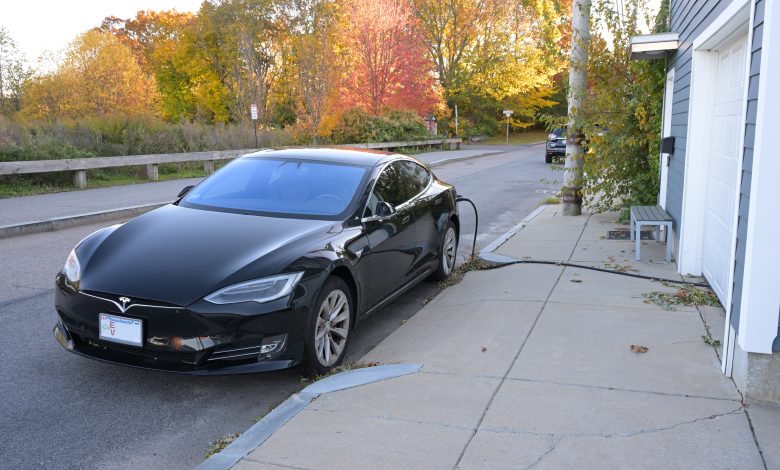
Featured image: Tesla Model S home charging in Dorchester, Boston November 2025 by 4300streetcar, CC BY 4.0. Image reproduced without editorial alteration; WordPress may create resized display copies.