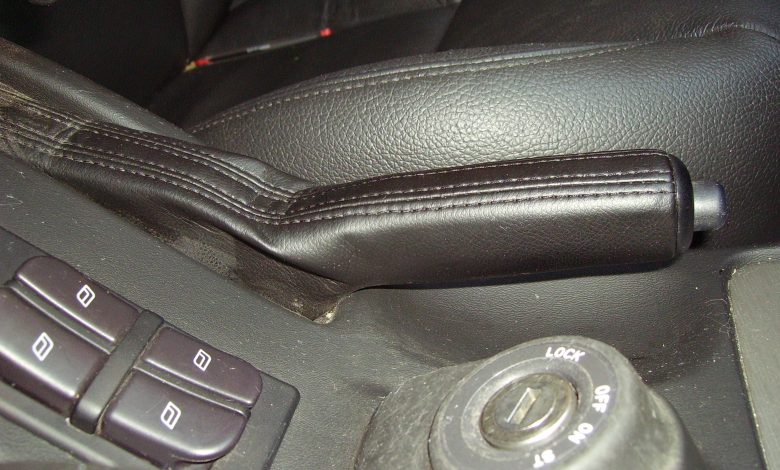
The parking brake has its own job
A parking brake is designed to help keep a parked vehicle from moving. Depending on the vehicle, it may use cables, small drum shoes, rear caliper mechanisms, or electric motors. It should be used according to the owner manual alongside the appropriate transmission position. If it holds one day and slips the next, that inconsistency is a fault to investigate. Do not rely on extra clicks or a harder pull as a lasting solution.
Record the release as well as the hold
Mention whether the brake releases promptly, whether a warning remains, and whether the problem follows wet weather or a long parking period. Do not use a steep slope as a diagnostic tool.
Mechanical systems depend on free movement
A cable operated system needs the lever, cable, and wheel mechanisms to move and release correctly. Corrosion or damaged cable housings can prevent force from reaching one wheel or keep a brake partly applied after release. Worn friction material or incorrect adjustment can also reduce holding force. Tightening a cable may hide one symptom while leaving the underlying mechanism stuck. It can even create brake drag. Inspection needs to establish what moves, what does not, and whether the friction surfaces are serviceable.
| Observation | Why to report it | Safe next step |
|---|---|---|
| Uncertain holding after application | Adjustment, movement, or control may need attention | Use secure parking arrangements and seek assessment |
| Brake seems reluctant to release | A mechanism may remain partly engaged | Report drag or heat without continuing to test |
| Electric warning or interrupted application | The control system may have detected a fault | Follow the manual and arrange diagnosis |
Electric operation still uses mechanical parts
An electric parking brake uses motors or an actuator to apply a physical brake. Warning messages may relate to electrical supply, position feedback, wiring, or a mechanical problem. A weak 12 volt battery can affect operation, but the battery should not be blamed without checks. Some systems require a service mode before brake work. Do not force a caliper piston or power a motor directly in an attempt to reset it; follow the specified professional procedure.
Avoid risky holding tests
Do not park on a steep hill simply to discover whether the brake will hold. If the vehicle has already moved unexpectedly, choose a safe level place and arrange repair. Use the transmission and any additional securing methods only as directed in the vehicle instructions. Keep people clear of the vehicle’s path and do not stand downhill while investigating. A parking brake fault can cause movement even with the engine off, so the absence of engine noise does not make the situation safe.
A trustworthy parking brake must apply, hold, and release consistently.
Editorial takeaway
Describe both application and release
Tell the technician whether the lever travel changed, the switch displays a warning, or the brake fails only after rain or long parking. Mention dragging, a hot smell, or difficulty moving away after release. These details can distinguish inadequate application from incomplete release, which require different checks. Ask whether both sides were inspected and whether the final holding and release functions were verified under controlled conditions. A sound repair restores predictable operation without excessive lever effort, warning messages, or a brake that remains partly on during travel.
Changes after rear brake replacement deserve special mention. Some designs need a defined adjustment or initialization sequence before the parking function works correctly. A warning that disappears after restarting is still relevant history. Record the exact message if it can be done while parked, because a general report that the brake sometimes fails gives the technician less useful information.
Featured image: Handbrake lever by Ballista, CC BY-SA 3.0. Image reproduced without editorial alteration; WordPress may create resized display copies.