
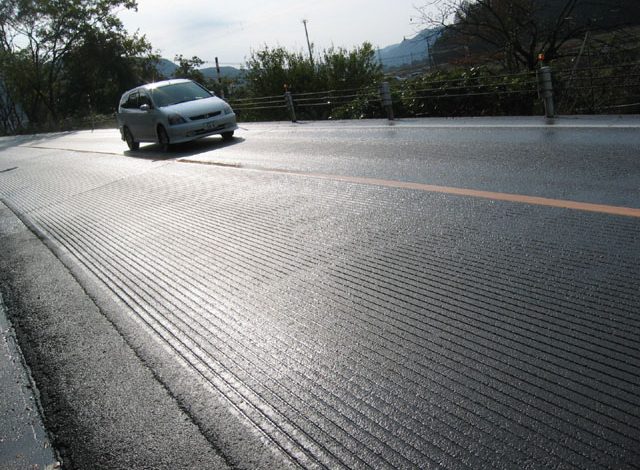
Some surfaces guide the tires
Long grooves, worn ruts, and pavement seams can make a vehicle feel as though it wants to follow the road’s texture. This tendency is often called tramlining. The tread interacts with channels in the surface, creating steering forces that differ from those on smooth pavement. A mild change confined to one road can be a surface effect, but strong wandering or a new loss of confidence should not be dismissed without checking tire and chassis condition.
Keep the route description specific
Note a recognizable road section and whether the sensation ends on smoother pavement. Report any recent impact or tire change, but collect details after stopping rather than deliberately repeating an unsettling drive.
Tire dimensions and construction affect the response
Different tread patterns, widths, and sidewall characteristics can react differently to the same grooves. A replacement tire may therefore change steering feel even when the approved size remains the same. Incorrect inflation, unusual wear, or mismatched tires can further influence the response. Start by confirming cold pressures and correct fitment. Avoid altering pressure away from the vehicle specification in an attempt to tune out wandering; that can create other handling and durability problems without addressing the underlying cause.
| Clue | What it suggests | Appropriate response |
|---|---|---|
| Mild following of a particular grooved surface | Tire interaction with pavement may contribute | Use smooth inputs and observe normal-route behavior |
| Wandering on ordinary smooth roads | Tire or chassis condition deserves broader checks | Request pressure, wear, and suspension assessment |
| Sudden strong vibration or difficult steering | A more immediate problem may be present | Stop safely and arrange assistance |
Look for clues that travel with the vehicle
If the car feels unsettled on many different surfaces, inspect more broadly. An off center steering wheel, uneven tread wear, clunks, or a pull on ordinary pavement can suggest alignment or worn components. A recent pothole impact adds another reason to check wheels and suspension. For example, a car that only follows a grooved bridge deck presents a different diagnostic picture from one that needs constant correction on every road. Tell the technician which behavior you actually observe.
Respond with steady control
Keep both hands available, maintain attention, and use smooth steering inputs. Repeated sharp corrections can make an unsettling sensation worse. Adjust speed to conditions and leave enough room to respond without abrupt maneuvers. Do not test the behavior by releasing the wheel. If steering suddenly becomes difficult, a tire warning appears, or vibration becomes severe, stop in a safe place and inspect or arrange help. Those changes require more caution than a familiar mild response to a particular pavement texture.
The road can influence steering, but a familiar explanation should never excuse a newly unstable car.
Editorial takeaway
Use a comparison to guide inspection
Record whether the sensation began after tire replacement, rotation, alignment, or an impact. Note whether it changes with speed and whether the road surface is visibly grooved. A professional can compare the complaint with pressure, tread condition, wheel angles, and joint play before recommending parts. If no defect is found, the explanation should still connect the observed road interaction to the vehicle’s tire setup. Understanding tramlining helps owners describe a real sensation clearly while preserving the distinction between normal surface sensitivity and a chassis fault that needs correction.
A passenger can help record the location and conditions after the trip. Keep notes off the driver’s hands during travel, and avoid repeating an uncomfortable route simply to gather more evidence.
Featured image: Grooving method by Shift, CC BY-SA 3.0. Image reproduced without editorial alteration; WordPress may create resized display copies.