Notice changes from the normal feel
A brake pedal gives useful clues because your foot is part of the control loop. What matters most is a change from how the same car normally feels. A pedal that now travels much farther, feels soft, stays hard, or slowly sinks calls for attention. Do not wait for a noise to confirm the concern. Brake faults can exist without a squeal, and a warning lamp may not identify every mechanical or hydraulic problem.
Do not let a second press reassure you
If braking is reduced or the pedal becomes abnormally low, stop safely and arrange help. A temporary improvement after another press is useful information for a technician, not evidence that continuing is safe.
A soft pedal needs a careful response
A spongy feel can occur when air is present in a hydraulic system or when a part expands more than it should under pressure. A long pedal can have other causes, including excessive movement at a wheel brake. An owner cannot tell which part is at fault by pumping the pedal a few times. If the pedal is low or braking seems reduced, park safely and arrange professional help. Do not keep driving because a second press happens to feel better.
| Change | Possible significance | Describe to the repairer |
|---|---|---|
| Soft or unusually long travel | Hydraulic or wheel-brake movement may be involved | When it began and whether braking changed |
| Unexpectedly hard during driving | Assistance may have been reduced | Operating conditions and related warnings |
| Pulsing during gentle routine stops | Needs distinction from normal anti-lock operation | Surface, speed range, and frequency |
A hard pedal can mean lost assistance
Many vehicles use a booster to reduce the force needed at the pedal. If that assistance is lost, the pedal may feel unusually hard and the driver may need much more force to slow down. The cause could involve vacuum, an electric assist system, or another design specific component. The system fitted to the vehicle determines the checks required. A hard pedal after the engine has been off and the stored assistance has been used is different from a sudden hard pedal during ordinary driving.
Separate normal pulses from a new fault
During an anti lock braking event, the pedal may pulse as the system controls wheel slip. That can be normal in the right circumstances. A pulse during gentle stops on a dry, smooth road deserves a different investigation. A technician may check wheel speed information, brake surfaces, and mounting accuracy. Note whether the pulse occurs near a stop, only from higher speeds, or every time you brake. These distinctions help without requiring an owner to perform risky road tests.
Your foot can recognize a change before it can explain one; let that recognition trigger inspection.
Editorial takeaway
Give the shop a clear description
Explain when the change began, whether fluid has been added, and whether any work was recently done. Mention warning lamps and visible fluid near a wheel or beneath the car. Never reach under an unsupported vehicle to search for a leak. A pedal that sinks while steady force is held can indicate a hydraulic problem and needs prompt assessment. The best use of pedal feel is to recognize a change early and describe it accurately. It is evidence for an inspection, not a safe way to approve the brakes for continued use.
An intermittent symptom still deserves a clear report. For example, a pedal that becomes long only after the car has sat overnight may require different checks from one that changes during a descent. Record the conditions after you have stopped safely. Do not try to reproduce reduced braking on a hill or in traffic to make the description more convincing.
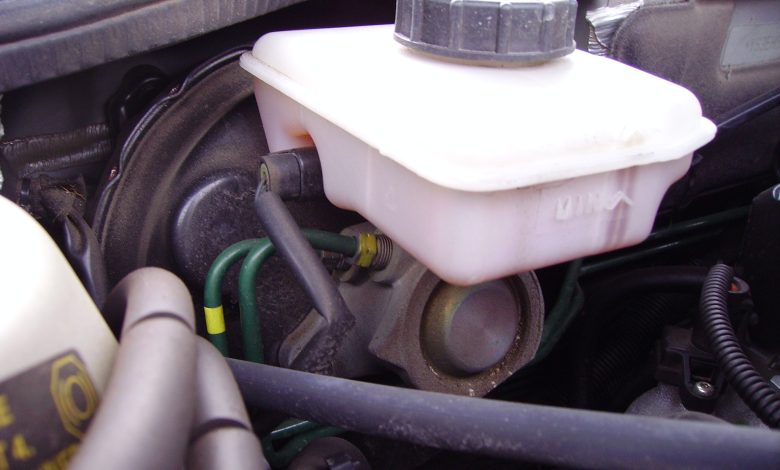
Featured image: Brake master cylinder and reservoir by Ballista, CC BY-SA 3.0. Image reproduced without editorial alteration; WordPress may create resized display copies.