A car that covers little distance still experiences time, temperature changes, and repeated operating cycles. That is why many maintenance items have both mileage and calendar limits. Low mileage can reduce some kinds of wear, but it does not automatically suspend fluid aging, seal deterioration, or the service requirements attached to particular components.
Read whichever comes first correctly
When the schedule specifies a distance or elapsed period, follow the first limit reached unless the manufacturer’s instructions state otherwise. Count from the last completed service for that item, not from the date you first noticed the reminder. Keep separate dates for work performed during different visits.
For example, an engine oil service and a coolant replacement may have occurred months apart. Grouping them under one vague annual-service date can accidentally extend one interval. Accurate item-by-item records prevent low usage from disguising a calendar deadline that has already arrived.
Put the calendar beside the odometer
For each time-limited task, keep the completion date even if the car hardly moves. Review short-trip and storage instructions separately. Low accumulated distance does not establish that the fluid or component has avoided the effects addressed by the manufacturer’s time requirement.
Consider what short journeys do
A low-mileage car may spend much of its running time warming up. Frequent short journeys can leave less opportunity for accumulated moisture and fuel-related contamination in the oil to be driven off under normal operating conditions. The manufacturer’s severe-service definitions may explicitly cover this kind of use.
Distance also fails to show time spent idling. Two vehicles with the same annual mileage can have substantially different running hours and operating temperatures. Describe the actual use to the workshop: a brief daily journey, occasional long trips, or months parked followed by concentrated use each suggest different inspection priorities.
| Use pattern | Question to ask | Planning response |
|---|---|---|
| Occasional long journeys | Has the time deadline arrived? | Retain the calendar reminder despite low distance |
| Frequent very short journeys | Does this match a special operating category? | Use the manual’s relevant schedule |
| Extended storage | Are storage and return-to-use steps specified? | Plan those checks rather than only resetting mileage targets |
Do not judge fluid life by appearance
Clear-looking coolant or lightly colored oil does not prove that every required property remains within specification. Additives and contamination are not fully assessed by a glance. Follow the prescribed service requirements and any approved condition-based process rather than inventing a longer interval from a clean appearance.
The same principle applies to a service reminder. Some reminders consider operating conditions, while others follow a simpler countdown. Understand what the particular vehicle calculates and whether separate time-limited items remain outside that display. Resetting a reminder does not complete maintenance that has not been performed.
Plan around prolonged inactivity
Before a long period without use, review the storage guidance and upcoming deadlines. On return, inspect accessible fluid levels and look for leakage before assuming the car is ready simply because the odometer has not moved. If a service became due while parked, discuss the appropriate work before resuming regular journeys.
Avoid repeatedly starting the engine for a few minutes as a substitute for a proper storage plan. Brief running may not establish full operating conditions. Follow the manufacturer’s guidance on inactivity rather than creating a ritual that adds starts without providing the intended benefit.
A low odometer reading does not stop the maintenance calendar.
Editorial takeaway
Make low usage predictable
Use calendar reminders alongside mileage records and book work before time limits expire. A lightly used vehicle can be maintained efficiently when its schedule reflects both aging and operation. The aim is appropriate attention at the required time, supported by records rather than assumptions about low mileage.
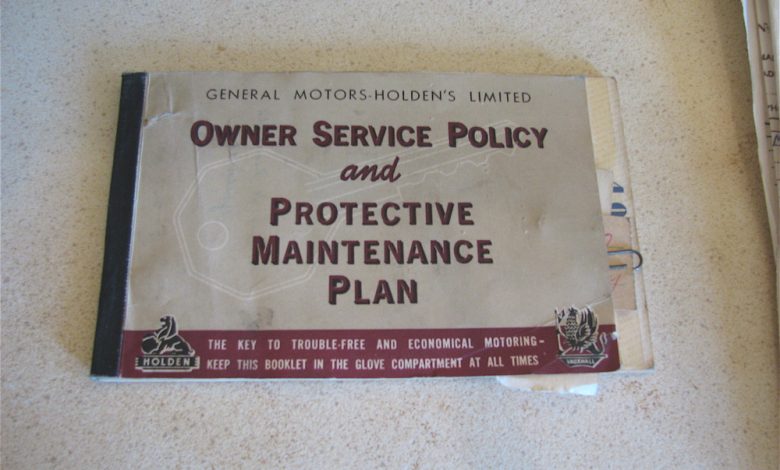
Featured image: Holden FB and EK Owner Service Policy and Protective Maintenance Plan.jpg by Steve Jackson JRG, CC BY-SA 3.0. Image reproduced without editorial alteration; WordPress may create resized display copies.