
Separate everyday slowing from the complete brake system
Electric cars often recover energy while slowing, but they still use friction brakes. These brakes create stopping force through contact between components such as pads and discs. Regeneration and friction braking can work together, with the vehicle coordinating the balance. The pedal may feel simple even though several systems are responding behind it.
Friction brakes are important when more stopping force is needed than regeneration can provide. They also support situations in which the battery cannot accept much recovered energy. A car that feels easy to drive with little brake-pedal use has not removed the need for a fully functioning mechanical and hydraulic braking system.
Include conventional brake checks in EV service
Ask what was inspected at the friction brakes, not only whether regeneration feels normal. Discs, pads, moving hardware, and hydraulic components still need the vehicle’s specified attention.
Recognize when regeneration has limits
Battery temperature and a high state of charge can reduce regenerative braking. Road grip and vehicle control functions can affect it too. Drivers should pay attention to messages and never assume yesterday’s accelerator-release response will be identical today. The normal brake pedal remains part of safe driving in every mode.
Imagine leaving a charging stop at the top of a hill. The battery may be near its selected upper limit just when the descent creates an opportunity to recover energy. The car may need friction braking for a greater share of the slowing. Follow the vehicle’s instructions and manage speed without trying to force more energy into the battery.
| Operating need | Regeneration limitation | Maintenance relevance |
|---|---|---|
| Urgent or strong slowing | Recovery alone may not provide required deceleration | Friction brakes must remain fully functional |
| Battery unable to accept much energy | Recovery capacity may be reduced | Normal brake response remains essential |
| Periods of light friction-brake use | Low use does not prevent corrosion or sticking | Scheduled inspection still matters |
Low use does not remove maintenance needs
Brake components remain exposed to water, dirt, and changes in temperature. In some patterns of electric driving, friction surfaces see less frequent use than on a conventional car. That makes the manufacturer’s inspection and maintenance guidance important even when the pads do not appear to wear quickly. Age and condition matter alongside remaining material.
Do not invent aggressive braking exercises to clean components. Some manufacturers describe specific maintenance behavior or automatic brake-cleaning functions; others give different advice. Use the instructions for the actual vehicle. A routine inspection by a qualified professional can identify uneven wear, corrosion, sticking parts, or other concerns that a casual exterior glance cannot establish.
Take changes in behavior seriously
Unusual grinding, pulling, vibration, warning lights, or a changed pedal feel should be assessed according to the manual’s safety instructions. A braking concern is not something to explain away because the car still has regeneration. If safe stopping ability is uncertain, stop using the vehicle and arrange appropriate assistance.
When describing a symptom, note whether it happens during light slowing, stronger braking, the first movement after parking, or every stop. Record any relevant dashboard message without becoming distracted while driving. Clear observations help a professional investigate the problem, but they do not replace inspection or justify continued driving with an unsafe brake system.
Recovering energy reduces some brake use; it does not reduce the need for brakes you can trust.
Editorial takeaway
Include brakes in the ownership routine
Keep service records and follow scheduled checks even if you rarely touch the brake pedal. Learn how your car blends its braking systems and how to respond if regeneration is limited. Friction brakes provide essential capability that energy recovery alone cannot guarantee. Treating them as active safety equipment, rather than backup hardware that never needs attention, supports more dependable electric-car ownership.
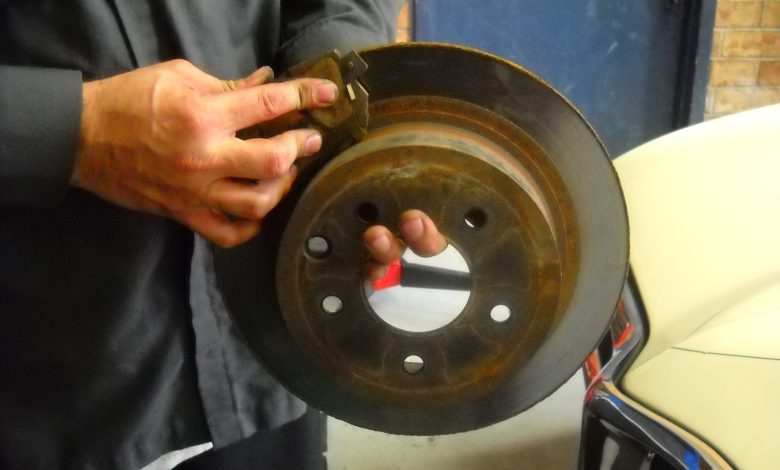
Featured image: Brake pads by Amm105, CC BY-SA 3.0. Image reproduced without editorial alteration; WordPress may create resized display copies.