
Vehicle glass is engineered for specific locations and functions. Two common constructions are laminated glass and tempered glass, and they behave differently when damaged. Understanding the distinction helps owners interpret markings, discuss replacement options, and respond to chips or cracks without treating every window as an interchangeable sheet of clear material.
Optical quality also deserves attention. If straight lines appear distorted through a replacement windshield or reflections seem unusually doubled, report that observation to the installer rather than adapting your driving position around it.
Laminated glass holds layers together
Laminated construction typically places a transparent interlayer between glass layers. When the glass cracks, that interlayer helps retain fragments and preserve the assembly’s overall form. Windshields commonly use this approach, and some vehicles use laminated glass in other locations too. The appearance of a window alone may not reveal its construction. Consult the glass markings or the vehicle documentation rather than assuming all side windows are made the same way.
Write down the window’s functions
Before authorizing replacement, ask the installer to confirm the relevant glass construction and any heating, acoustic, antenna, or sensor requirements. Keep the discussion tied to the actual window rather than the assumption that every panel in the vehicle is alike.
Tempering changes the breakage pattern
Tempered glass is processed to create a particular internal stress pattern. When it fails, it tends to break into many small pieces rather than behave like ordinary untreated sheet glass. It is used in various automotive windows, depending on the design. This behavior is different from a laminated assembly that remains held together after cracking. Neither description should be treated as a reason to strike, drill, or otherwise experiment with installed vehicle glass.
Glass can carry additional functions
A window may incorporate heating elements, coatings, antennas, acoustic features, or mounting arrangements for sensors and cameras. These details can matter as much as the basic glass construction when replacing it. A panel that fits the opening may still lack an intended function. For example, a replacement windshield may need to match the requirements of equipment mounted behind it, and some systems require professional checking or calibration after the work.
| Construction or feature | General behavior or purpose | Replacement question |
|---|---|---|
| Laminated construction | Interlayer helps retain the cracked assembly | Is the specified construction preserved? |
| Tempered construction | Distinctive breakage behavior after failure | Does the panel match the required application? |
| Integrated equipment | Heating, antennas, or sensor-related functions | Are functions and any required checks included? |
Damage needs a location specific assessment
A small chip and a long crack are different problems, and the location of the damage matters. An owner cannot reliably determine repairability from diameter alone. Visibility, depth, edge proximity, and the glass assembly all influence the assessment. Protect damaged glass from unnecessary stress and arrange qualified evaluation. Avoid pouring very hot water onto cold glass or applying improvised pressure in an attempt to stop a crack from spreading.
Replacement glass must restore the window’s work, not simply fill the window’s opening.
Editorial takeaway
Choose replacement by specification
When arranging work, ask whether the replacement preserves the relevant acoustic, heating, optical, and sensor features. Follow the installer’s instructions about adhesive curing and vehicle use after installation. If emergency escape equipment is carried, confirm its suitability for the actual windows and follow its manufacturer’s guidance; different constructions do not respond identically. The conclusion is that automotive glass is a functional component of the vehicle system. Correct construction, compatible equipment, and professional installation matter more than obtaining a panel that merely looks similar.
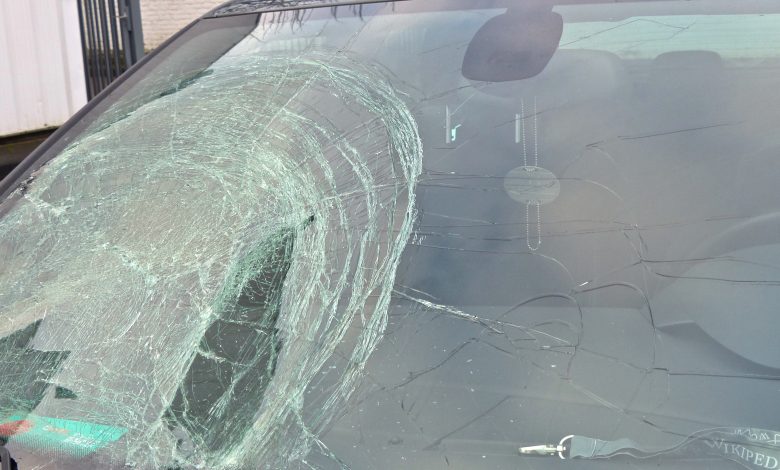
Featured image: Autoglas gesplittert 01 by Geolina163, CC BY-SA 4.0. Image reproduced without editorial alteration; WordPress may create resized display copies.