
Two cars set to the same cabin temperature can feel different because air reaches their occupants differently. Vent placement, direction, airflow volume, and the temperature of surrounding surfaces all contribute to comfort. Climate control design therefore involves more than the heating or cooling capacity of the system. The path from the outlet to the person matters.
Passengers with different preferences can start by redirecting their nearest outlets. This preserves useful circulation through the rest of the cabin while reducing an uncomfortable stream against the face or neck.
Airflow creates local sensations
A concentrated stream of cool air on one hand can feel unpleasant even when the rest of the cabin remains warm. Directing a vent slightly away may improve comfort without changing the temperature setting. Wide outlets and adjustable vanes give occupants ways to spread airflow, but the range of adjustment matters. A decorative vent that cannot be aimed usefully may offer less practical flexibility than a simpler outlet with clear controls.
Start with the air path
When one person feels uncomfortable, check the nearest outlet direction and any obstruction before making a large temperature change. Keep glass-clearing outlets available and investigate persistent uneven performance rather than repeatedly compensating with controls.
Placement interacts with the interior layout
A screen, steering wheel, or raised console can interrupt the route between an outlet and an occupant. A phone mounted in front of a vent may create an additional obstruction and expose the device to sustained hot or cold air. Check that accessories do not block the intended distribution. When evaluating a cabin, try the vents with the seat in its usual position and with common objects in their normal storage locations.
Rear passengers face different conditions
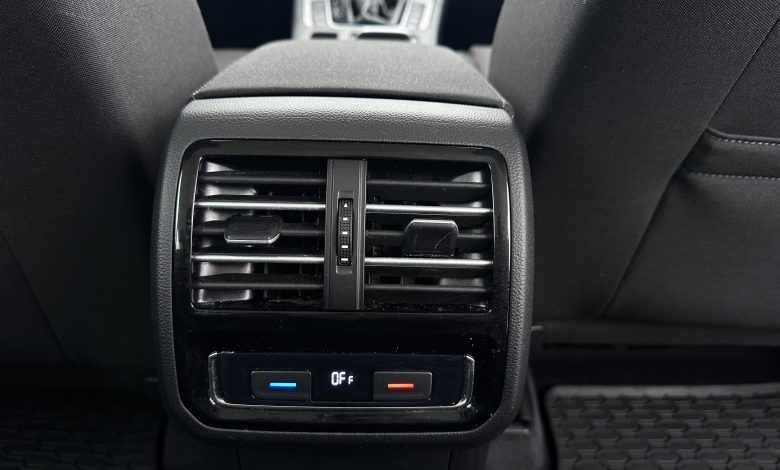
Front seat occupants may feel comfortable before the rear cabin reaches a similar condition. Dedicated rear outlets can help distribute air, but they do not always represent a separately controlled climate zone. Some outlets depend on the front system’s selected mode. Floor vents may also be obscured by luggage or mats. Consult the controls and documentation rather than assuming that every visible outlet operates independently or delivers the same temperature.
| Concern | First check | Interpret cautiously |
|---|---|---|
| A cold stream on one occupant | Aim and opening of the nearest vent | The whole cabin may not need a warmer setting |
| Rear cabin feels different | Outlet mode and unobstructed paths | Rear outlets do not necessarily mean a separate zone |
| Glass remains misted | Correct defogging settings and clear outlets | Persistent fogging may need further investigation |
Defogging is a distinct task
Air directed toward glass helps manage condensation by changing conditions at the surface. The system may use air conditioning during this process because reducing moisture can assist clearing. Avoid closing or covering windshield and side window outlets. If the glass repeatedly fogs despite correct settings, check for excess cabin moisture and seek inspection where appropriate. A persistent problem should not be dismissed as merely an inconvenient vent arrangement.
Comfort depends on where the air arrives as much as on the temperature chosen at the controls.
Editorial takeaway
Adjust distribution before chasing temperature
When comfort is uneven, first examine outlet direction, fan setting, selected mode, and obstructions. Allow time for hot or cold interior surfaces to approach a more comfortable condition. Automatic systems may deliberately change airflow as the cabin approaches its target, so frequent large setting changes can complicate assessment. The conclusion is that useful climate control combines effective temperature management with thoughtful air distribution. Owners can often improve comfort through small directional adjustments and clear airflow paths, while unresolved or newly uneven performance deserves an appropriate condition check.
Featured image: Volkswagen Passat (B8) – rear air vents (interior) by Acgskup, CC BY 4.0. Image reproduced without editorial alteration; WordPress may create resized display copies.