Fluid service descriptions can sound interchangeable even when they involve different procedures. A drain-and-fill removes what drains through the chosen opening and replaces it. A broader exchange may replace more of the system’s contents through an approved sequence or equipment. Understanding the distinction helps an owner ask useful questions without choosing a method solely from its name.
Recognize why some fluid remains
Many systems contain passages, coolers, housings, or internal cavities that do not empty through one drain point. A transmission can retain fluid away from its sump, while a cooling system may retain liquid in the engine or heater circuit. The quantity drained may therefore be smaller than the system’s total dry capacity.
That difference does not automatically mean a drain-and-fill is inadequate. The manufacturer may specify it as the normal service method. Conversely, repeatedly adding the total dry capacity after a partial drain can overfill the system. Service-fill information and the final level procedure matter more than a single capacity number.
Ask what the service name includes
Before approving a fluid procedure, ask which parts of the system it reaches, whether filters or seals are included, and how the final level is set. Keep chemical cleaning separate in the discussion. The name of a service alone does not describe its suitability for a particular system.
Ask what the proposed exchange includes
Find out whether the workshop means a machine-assisted exchange, several prescribed drain cycles, or a complete drain using multiple locations. Ask which procedure is approved for the particular system and fluid. A general promise to remove everything does not establish that the method suits the vehicle.
For example, a gearbox procedure may require the correct fluid temperature and a defined selector sequence before level adjustment. A cooling-system exchange may require controlled filling and bleeding. The exchange volume alone cannot tell you whether these essential steps have been performed.
| Procedure or claim | What to clarify | Important limit |
|---|---|---|
| Drain-and-fill | Drain points and prescribed refill procedure | Fluid can remain in other parts of the system |
| Fluid exchange | Equipment, circulation method, and application approval | The label alone does not establish a complete replacement |
| Chemical cleaning | Reason, compatibility, and removal method | Cleaning is a separate intervention, not an automatic upgrade |
Keep cleaning claims separate from service
An exchange is not necessarily a chemical flush, and a flush is not a universal cure for symptoms. Ask whether cleaning agents are involved and why they are appropriate. Introducing an unapproved chemical can create compatibility questions that did not exist before the service.
If the system is already malfunctioning, arrange diagnosis before treating fresh fluid as a guaranteed repair. A shift concern can involve internal wear or control issues, and overheating can result from a failed component. Changing fluid may be part of the solution, but it cannot reliably reverse every mechanical fault.
Account for contamination and history
Known contamination can justify a more involved procedure, but the source needs correction as well. Replacing coolant without repairing the path through which oil entered it leaves the cause active. Similarly, a repeated low level requires leak investigation rather than simply a more thorough refill.
When the previous fluid identity is uncertain, tell the workshop directly. It can select a procedure based on the system requirements and findings. Guessing compatibility from color or trying an improvised mixture can make the final condition harder to establish.
Choose a fluid service by its documented procedure and application, rather than by how complete its name sounds.
Editorial takeaway
Choose the procedure, then document it
Record the method, fluid specification, quantity used, and any related parts replaced. Follow the manufacturer’s service requirements rather than assuming the most elaborate description is always best. The useful outcome is a correctly serviced system with an accurate level and a clear maintenance baseline.
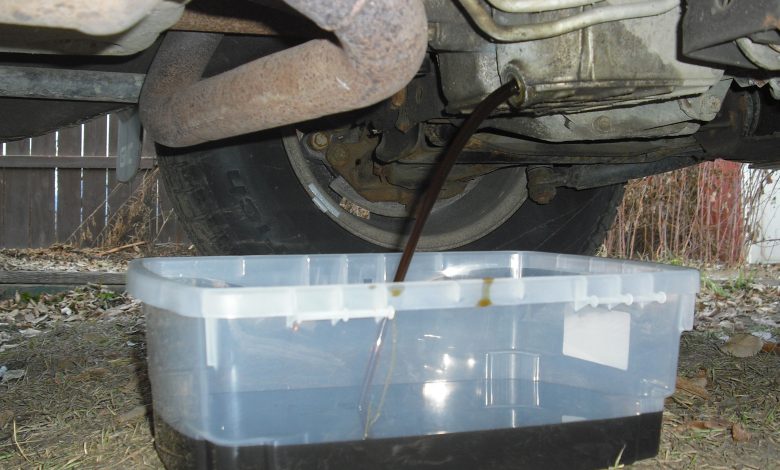
Featured image: Oil Change oil pan 2005 gmc suv.JPG by Myke Waddy (Myke2020), Public domain. Image reproduced without editorial alteration; WordPress may create resized display copies.