Aftermarket additives often promise to clean, quiet, seal, or protect a vehicle’s fluid systems. Those claims can make an extra bottle seem like a simple improvement during routine service. Before adding anything, remember that the specified fluid is already a formulated product, and changing its composition may not be part of the manufacturer’s maintenance procedure.
Start with the correct base fluid
Confirm that the installed oil, coolant, or gearbox fluid meets the vehicle’s requirement. A correctly specified product provides a defined starting point for diagnosis and service. Adding an unknown treatment to an unsuitable fluid does not reliably transform it into the right one.
For example, an oil with the wrong approval is not corrected merely by adding a product described as extra protection. The engine’s requirements concern a complete combination of properties. Ask whether the proposed addition is explicitly permitted for the application rather than assuming compatibility from a broad label.
Ask what the extra bottle changes
Identify the intended purpose, application-specific permission, and effect on the final fluid volume before considering an additive. Record symptoms first if a treatment is proposed for a fault. A changed sound or smaller visible leak cannot by itself confirm that the failed component has been repaired.
Separate maintenance from symptom treatment
A fluid additive should not replace investigation of a new noise, leak, or pressure concern. Symptoms have causes: a damaged seal, restricted passage, worn component, or incorrect level may need a specific repair. A quieter sound after treatment does not establish that the underlying condition has been corrected.
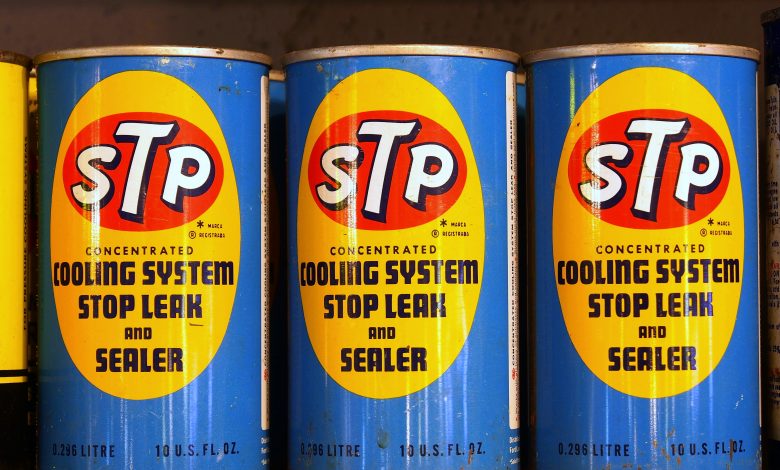
A stop-leak product illustrates the distinction. Reducing visible leakage, if it happens, does not identify the failed joint or demonstrate the long-term condition of the system. Before choosing a treatment, ask what component is suspected and what evidence supports that conclusion.
| Proposal | Question to resolve | Evidence limit |
|---|---|---|
| Extra protection during routine service | Is the addition permitted with the specified fluid? | Broad compatibility language is not application confirmation |
| Noise or leak treatment | What diagnosed cause is being addressed? | A quieter or drier result does not identify the cause |
| Cleaning step | Why is it required, and how is it accounted for? | Fresh fluid afterward does not prove contamination cannot recur |
Ask practical compatibility questions
Find out what the vehicle manufacturer allows, what the product manufacturer claims for the exact application, and whether a workshop is recommending it for a defined procedure. General statements about suitability for all engines or all transmissions deserve more scrutiny than an application-specific instruction.
Concentration matters as well. An additive occupies volume and changes the mixture, so pouring it into a system already at its maximum level can create an overfill. The absence of an immediate symptom does not prove that every required property remains appropriate after the addition.
Be cautious with cleaning procedures
Some repair procedures include approved cleaning or conditioning steps, but that does not make every routine service a candidate for chemical flushing. The system’s condition, contamination, and service instructions should determine the method. A workshop should explain why a cleaner is needed and how it will be removed or accounted for.
Where sludge or severe contamination is suspected, diagnosis matters particularly. There may be an operating issue or failed component behind the deposits. Cleaning without correcting that source can leave the same problem developing again after the fresh fluid is installed.
A useful maintenance intervention has a defined purpose, a compatible procedure, and a result that can be checked.
Editorial takeaway
Preserve a clear maintenance baseline
Use specified fluids at the correct level and interval, and document any approved treatment that is actually required. If symptoms exist, record them before work and verify the outcome afterward. Clear specifications and targeted repairs provide a more dependable plan than repeatedly adding products whose effects are difficult to separate.
Featured image: STP Cooling, Stop Leak and Sealer can.JPG by Alf van Beem, CC0 1.0. Image reproduced without editorial alteration; WordPress may create resized display copies.