Larger wheels can change a vehicle’s visual proportions, but the engineering consequences extend well beyond style. Wheel diameter, tire sidewall height, assembly mass, and approved fitment interact with ride comfort and steering behavior. Understanding the complete wheel and tire combination is more useful than assuming that a larger diameter automatically improves performance.
Check the spare wheel arrangements as well. A temporary spare or repair kit may come with specific operating instructions that remain relevant even when the main wheel style changes.
The tire supplies part of the compliance
When the overall rolling diameter remains similar, a larger wheel usually requires a shorter tire sidewall. The sidewall contributes to how the tire deforms over bumps and sharp edges. A shorter sidewall may change steering response, but it can also leave less cushioning against road impacts. Tire construction and pressure matter too, so two combinations with similar dimensions may still feel different on broken pavement.
Check the complete wheel and tire combination
Before changing wheel size, confirm the vehicle’s approved combinations and relevant load, clearance, and pressure requirements. Appearance and nominal diameter alone cannot establish compatibility; seek qualified advice where the specification is uncertain.
Mass moves with the suspension
Wheels and tires form part of the mass that moves as the suspension follows the road. Changes in that mass can influence how effectively the suspension controls wheel movement. A larger wheel is not always heavier because materials and construction vary, but size alone says little about the complete assembly. Comparing appearance without considering mass overlooks a factor that engineers must account for during suspension development.
Clearance involves several dimensions
Wheel width, offset, brake clearance, tire width, and suspension travel all affect whether a combination fits. A wheel that bolts onto the hub may still interfere when steering fully or when the suspension compresses. The tire may also approach bodywork differently under load. Use approved specifications and qualified advice rather than treating a stationary visual check as sufficient confirmation. Compatibility includes more than the bolt pattern.
| Consideration | Question to ask | Avoid assuming |
|---|---|---|
| Tire compliance | How does the approved tire arrangement suit local roads? | A larger wheel automatically improves comfort |
| Clearance | Is the complete assembly approved for the vehicle? | Matching diameter proves a correct fit |
| Ownership routine | Are suitable tires available for your use? | Appearance captures replacement and care needs |
Pressure and load capacity remain essential
The correct tire specification must suit the vehicle’s load and operating requirements. A different wheel style does not remove the need for appropriate load capability or the specified pressure guidance. Pressure should be checked under the conditions described in the vehicle documentation. Do not use a softer setting simply to compensate for a harsh ride, because that can introduce other problems without addressing an unsuitable combination.
The best wheel choice fits the road, the tire requirements, and the ownership routine as well as the bodywork.
Editorial takeaway
Choose around actual road conditions
For a car that regularly encounters rough streets, a suitable combination with more sidewall may offer practical advantages. Another driver may value a different steering feel on smoother routes. Before choosing, compare approved options and consider replacement tire availability, ride comfort, wheel damage exposure, and cleaning effort. The conclusion is to evaluate wheels as working components within a tuned system. Their appearance is only one outcome, and a balanced fit often matters more than selecting the largest diameter that seems possible.
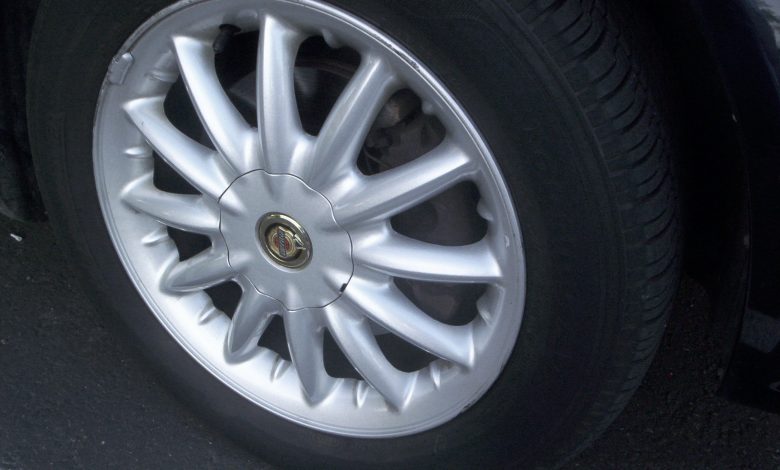
Featured image: Alumwheel by Angela2109; subsequent edits by Centpacrr and Hohum, Public domain (author release). Image reproduced without editorial alteration; WordPress may create resized display copies.