A large temperature difference is a clue
Brakes normally create heat, so a warm wheel after driving is not a diagnosis by itself. A strong burning smell, smoke, unusual resistance, or one corner that seems much hotter than its partner is different. Possible causes include a dragging brake, wheel bearing trouble, or another source of friction. Do not touch the wheel, disc, or caliper to compare temperatures. Hot metal can burn skin, and judging heat by hand can lead to a painful and unreliable conclusion.
Observe heat without touching
Do not touch a hot wheel, brake, or hub, and do not cool it by pouring water on it. Report odor, smoke, pulling, or noise from a safe position; visible smoke or worsening behavior calls for stopping and assistance.
A brake can remain partly applied
Caliper slides, pistons, parking brake mechanisms, or restricted hydraulic flow can prevent a brake from releasing fully. The resulting friction generates heat even when the driver is not pressing the pedal. A vehicle may feel sluggish, pull, or develop a smell after a short trip. Replacing pads alone will not necessarily cure the cause. The technician needs to determine whether the problem is mechanical movement, hydraulic pressure, parking brake release, or something else before choosing a repair.
| Associated clue | Potential investigation | Owner response |
|---|---|---|
| Heat with burning smell or pull | Brake drag or another friction source | Stop safely and arrange inspection |
| Heat with rumbling or changing noise | Bearing and brake checks may both be relevant | Describe when the sound occurs |
| Heat after recent wheel or brake work | Installation and component movement need review | Give the repairer the work history |
Bearings create a different investigation
A damaged wheel bearing can also generate heat, often with a hum, growl, or change in noise as loads shift. Noise location can be deceptive because the body transmits sound. A hot wheel does not prove the bearing is responsible, and a noisy bearing is not always detectably loose during a simple check. A shop should assess the hub and brake assembly together rather than replacing the first part named in an online symptom list.
Respond before heat damages more parts
If there is smoke, severe heat, a strong smell, or reduced braking, stop in a safe place and arrange recovery. Do not pour water over a hot brake assembly. Do not continue driving to burn off the smell or hope the mechanism frees itself. Excessive heat can damage pads, seals, fluid, bearings, and nearby components. Keep clear of traffic while waiting, and tell the recovery service if a wheel may be locked or difficult to roll.
Heat is a reason to stop guessing: the source must be found before more parts are damaged.
Editorial takeaway
Give the repairer the full sequence
Explain whether the problem began after brake work, a long descent, parking brake use, or an ordinary short journey. Mention any pull and whether the pedal changed as the heat developed. A professional can compare temperatures safely, inspect wear patterns, and test release operation. Ask whether related heat damage was assessed as well as the original sticking part. The important outcome is free wheel rotation and balanced brake function under the proper test conditions, not merely a wheel that has cooled down while parked at the shop.
A tire can also suffer when nearby parts become extremely hot. During inspection, ask whether the valve, wheel finish, tire bead area, and any sensor wiring show heat damage. The extent depends on the event. This prevents a narrow repair that frees the brake but overlooks another component affected by the same period of excessive friction.
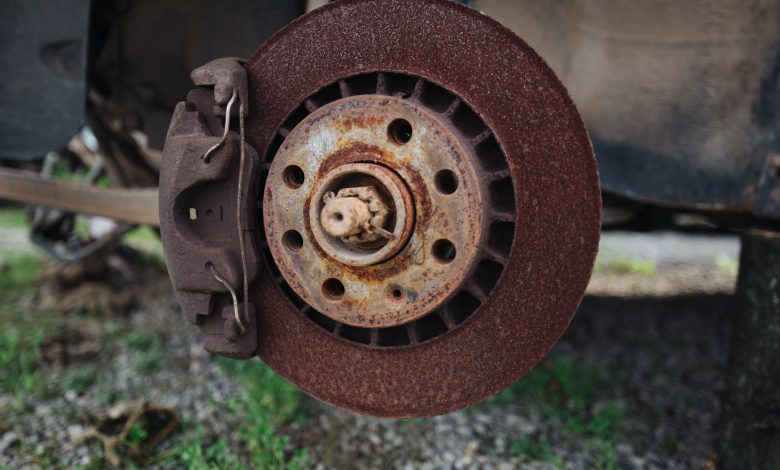
Featured image: Rusty brake disc and caliper shown on a vehicle parked on gravel near a road by Nenad Stojković (Shixart1985), CC BY 2.0. Image reproduced without editorial alteration; WordPress may create resized display copies.