Start with convenience rather than quantity
A useful snack collection makes an ordinary travel day easier. It provides something satisfying between planned meals without filling the cabin with awkward packaging and crumbs. Begin with the length of the journey, the number of passengers, and the stops you expect to make. A short transfer needs a different supply from an afternoon crossing a sparsely served area.
Choose familiar foods that your group already enjoys. A long trip is an inconvenient setting for discovering that a large unfamiliar snack is unpopular. Consider individual dietary requirements and keep packaging information available where needed rather than mixing every item into an anonymous communal container.
Pack for storage as well as appetite
Sort foods by their storage instructions before choosing containers. Keep original ingredient information available for anyone who needs it, and favor foods you can store reliably throughout the day’s route.
Think about texture and cleanup
Foods that shed fine crumbs or drip easily create more work in a moving cabin. Whole pieces of suitable fruit, neatly portioned dry snacks, and other low mess options can be easier to manage. Prepare portions before departure so passengers do not have to balance open bulk bags across their laps.
Packaging should be easy to close again. A rigid container protects delicate items, while a small resealable pouch may suit something sturdy. Bring a dedicated rubbish bag and a way to clean hands during stops. These simple provisions prevent sticky wrappers from spreading across door pockets and seat cushions.
| Option | Packing advantage | What to manage |
|---|---|---|
| Sturdy whole fruit | Less loose packaging and simple portions | Bruising, washing, and suitable storage |
| Portioned dry snacks | Easy distribution and resealing | Crumbs and ingredient identification |
| Foods requiring chilling | Can broaden meal choices at a stop | Reliable temperature control throughout storage |
Match storage to the food
Some foods require controlled temperatures and should not be treated like shelf stable provisions. Follow the storage directions on the product and use appropriate cooling arrangements when necessary. If keeping an item within its required conditions is uncertain, select a simpler alternative for that day.
Separate cold storage from frequently used dry snacks. Repeatedly opening a cooler to find a packet that did not need refrigeration makes organization worse. Pack the items needed first where they are accessible, and avoid placing food containers where shifting luggage could crush them.
Make snack breaks part of the itinerary
Plan to enjoy food during suitable stops. A short walk and a table can turn a practical pause into a pleasant part of the trip. This also gives everyone a chance to sort packaging and check what remains without juggling containers while the car is moving.
Keep drinks in suitable holders and avoid overfilling the cabin with loose bottles. Refillable containers can reduce clutter when convenient refill opportunities are available. The best arrangement is one passengers can use without repeatedly asking someone else to unpack a bag.
A useful travel snack fits the journey twice: once when packed and again when it is time to eat.
Editorial takeaway
Pack enough flexibility for changing plans
A modest reserve helps when lunch takes longer to find than expected, but excess food can become another storage problem. Choose a few complementary options rather than many nearly identical ones. Something crisp, something more filling, and a familiar favorite often provide sufficient variety.
After the journey, note what was eaten and what returned untouched. That observation is more useful than an elaborate universal packing list. Snacks work well when they fit the people, the route, and the storage available, while keeping meals and breaks enjoyable.
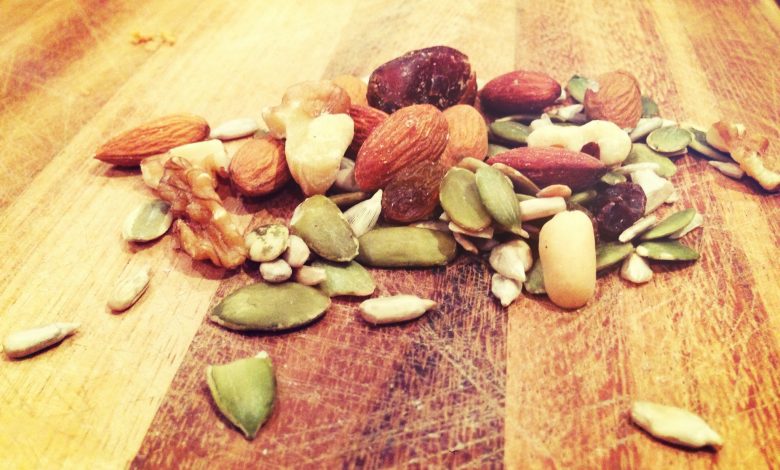
Featured image: Trail Mix by Papathanasiouk, CC BY-SA 3.0. Image reproduced without editorial alteration; WordPress may create resized display copies.