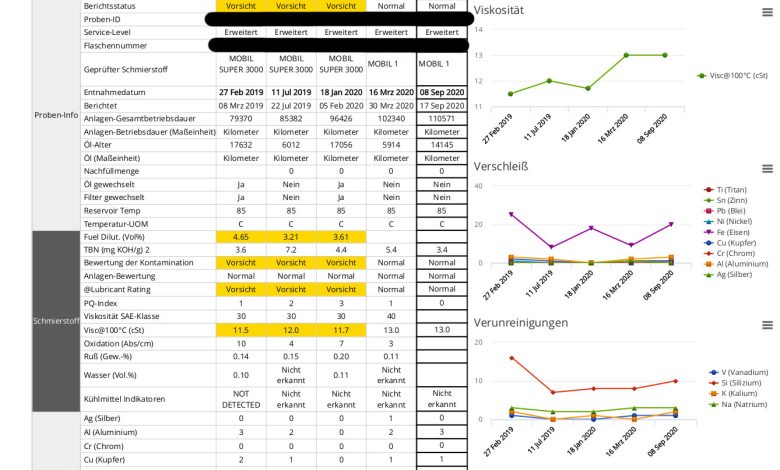
Used-oil analysis can provide information about lubricant condition and material present in a sample. It is most useful when the sample has a clear history and can be compared with relevant previous results. A laboratory report is evidence to interpret, rather than a complete diagnosis or automatic permission to extend the oil interval.
Give the sample a reliable history
Record the engine identification, oil specification, distance on the oil, total vehicle mileage, and top-up amounts. Add information about unusual operating conditions or recent repairs. Without this background, a change in the report may reflect a different service interval or dilution from fresh oil rather than a developing fault.
Use the sampling kit and collection method specified by the laboratory. A dirty container or material scraped from a drain pan can contaminate the sample. The aim is to collect representative used oil, not whatever residue happened to remain on tools or in a previously used bottle.
Give the laboratory a history, not just a bottle
Keep sampling conditions and the oil’s service history with each report. Record top-ups, distance or time in use, and recent work where known. A changed sample history can alter a comparison, so discuss unusual findings before treating one result as a repair verdict.
Understand the main groups of findings
Reports may discuss viscosity, contamination indicators, additive-related elements, and wear-related material. These groups answer different questions. A viscosity change concerns lubricant behavior, while certain contaminants may suggest an operating or sealing issue. Wear-related elements can offer clues, but they do not always identify one particular part.
For example, an element associated with several engine materials cannot by itself prove that a specific bearing has failed. The pattern, magnitude, oil history, and other observations matter. Ask the laboratory or a knowledgeable technician to explain the interpretation rather than matching one number to a dramatic internet diagnosis.
| Information | What it helps explain | Interpretation limit |
|---|---|---|
| Sample and oil history | Whether reports are meaningfully comparable | Different use or top-ups can complicate a trend |
| Repeated related findings | Whether a pattern persists or changes | A trend still needs operating and mechanical context |
| Physical warnings or symptoms | Problems requiring immediate vehicle assessment | A reassuring report does not override a warning |
Prefer trends over isolated conclusions
Successive samples collected consistently can reveal movement that a single result cannot. A change after a repair may need different interpretation from a slow increase over several intervals. Fresh top-ups can also dilute some measurements, making the recorded quantity important to any comparison.
Comparisons need similar operating context. A sample after frequent short journeys may differ from one after long steady trips, even at similar mileage. Changing the oil type, sampling method, and interval simultaneously makes it harder to know which factor explains the result.
Keep physical symptoms in view
An oil-pressure warning, mechanical noise, overheating, or a rapidly changing level requires direct assessment. Waiting for a mailed sample result is not an appropriate response to an urgent operating symptom. Analysis complements inspections and measurements; it does not replace the vehicle’s warnings or a technician’s checks.
Likewise, a reassuring report cannot certify every engine component. Some faults do not release a useful signature into a routine sample, and the sampled oil represents one point in time. Respect the test’s scope instead of treating a normal result as proof of unlimited future serviceability.
Oil analysis is strongest as a documented trend that guides questions, rather than a standalone engine verdict.
Editorial takeaway
Use the report to choose the next step
Keep the report with maintenance records and discuss unusual findings before changing intervals or authorizing repairs. Follow manufacturer requirements unless an appropriate approved program says otherwise. A well-documented analysis is valuable because it narrows questions and supports a reasoned next investigation.
Featured image: Oil analysis anon.jpg by Oil lab and Hermannk, Public domain. Image reproduced without editorial alteration; WordPress may create resized display copies.